
Children’s therapy

Children’s Therapy

Empowering children to navigate challenges and shine bright.

When your child’s behavior or emotions start to change

With children, concerns are often noticed before they are understood.

You may see changes in behavior, mood, or how your child responds to everyday situations. Something feels different, but it is not always clear what is causing it or how to respond.

In some cases, the shift is gradual. In others, it feels more sudden.

You might notice:

  • More frequent emotional outbursts or difficulty calming down 
  • Increased defiance or pushback around expectations 
  • Changes in sleep, routines, or behavior at home 
  • Sensitivity to transitions or changes in structure 
  • Pulling away or becoming more withdrawn than usual 

At a certain point, it becomes less about a single behavior and more about a pattern that feels harder to manage or understand.
What children’s therapy can help with

Children’s therapy focuses on emotional and behavioral patterns that are difficult for a child to regulate on their own.

Some concerns are more external:

  • Tantrums, outbursts, or difficulty managing frustration 
  • Trouble following directions or respecting boundaries 
  • Impulse control challenges or acting without thinking 
  • Conflict at home or school 

Other concerns are more internal, even if they are not expressed directly:

  • Anxiety, fears, or avoidance of certain situations 
  • Low mood or loss of interest in activities 
  • Difficulty expressing feelings or needs 
  • Increased sensitivity to criticism or perceived failure 

There are also situations where concerns are connected to specific experiences:

  • Changes within the family, such as separation or transitions 
  • Exposure to stressful or overwhelming events 
  • Difficulty adjusting to new environments or expectations 

Because children often communicate through behavior, it is not always obvious what is driving the pattern.

How children’s therapy is different

Children’s therapy is adapted to how children naturally communicate and process experiences.

Children do not always have the language to explain what they are feeling. Instead, they express themselves through behavior, play, and interaction.

This means therapy often includes:

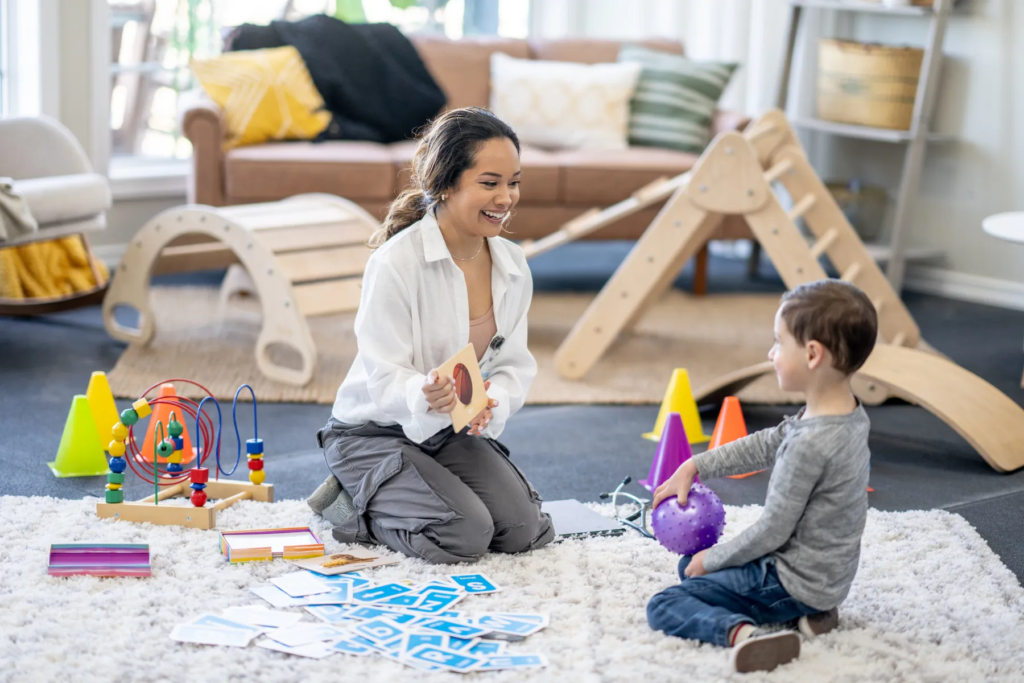
  • Play based approaches to explore emotional experiences 
  • Observing how the child responds to structure, limits, and interaction 
  • Building skills through activities rather than direct instruction 
  • Creating a space where expression feels natural rather than forced 

Parents are also an important part of the process.

  • You are given tools to respond more effectively at home 
  • Patterns are addressed across environments, not just in session 
  • Consistency is built between therapy and everyday interactions 

How these patterns develop

Children respond to their environment in ways that make sense based on their development and experience.
Behavior is often a form of communication.

  • Emotional outbursts may reflect difficulty regulating feelings 
  • Avoidance may reflect anxiety or uncertainty 
  • Defiance may reflect frustration or lack of control 

Over time, patterns form based on what happens next.

  • A behavior leads to a certain response 
  • That response reinforces or reduces the behavior 
  • The pattern repeats 

In many cases, the issue is not that a child is choosing the behavior intentionally, but that they do not yet have the skills to respond differently.

How therapy helps in children’s therapy

Children’s therapy focuses on helping children build the skills they need to manage emotions, behavior, and interactions more effectively.

This work often includes several key areas.

Building emotional awareness and regulation

Children are supported in recognizing emotions and learning how to respond to them. Skills drawn from Dialectical Behavior Therapy are often used in a developmentally appropriate way to help children pause, identify what they are feeling, and reduce emotional intensity.

Developing coping and thinking patterns

Cognitive Behavioral Therapy is used to help children understand connections between thoughts, feelings, and behavior. This includes learning more helpful ways of interpreting situations and responding to challenges.

Addressing trauma and stressful experiences

Trauma-focused Cognitive Behavioral Therapy is used when children have experienced stressful or overwhelming events. This approach helps children process those experiences, reduce emotional distress, and build a sense of safety and stability.

Using play as a therapeutic tool

Play therapy allows children to express emotions and experiences that they may not be able to communicate directly.
  • Play creates a natural way to explore feelings 
  • Patterns in play help identify underlying concerns 
  • Skills are introduced through interaction rather than instruction 
  • Supporting behavior change

    Behavioral strategies are used to understand what is reinforcing certain behaviors and how to shift them more effectively. This includes identifying triggers, adjusting responses, and building consistency across environments.

    Our approach towards children's therapy at Ravenwise Consulting

    At Ravenwise Consulting, children’s therapy is structured, flexible, and tailored to each child’s needs.
    We focus on understanding behavior in context, rather than just trying to change it directly.

    Sessions are designed to:

    • Help children build emotional and behavioral skills 
    • Identify patterns that are contributing to challenges 
    • Support parents in responding more effectively 
    • Create consistency between therapy and home environments 

    We integrate approaches such as Cognitive Behavioral Therapy, Trauma Focused Cognitive Behavioral Therapy, Dialectical Behavior Therapy, and Play Therapy.
    This allows therapy to address both underlying experiences and current behavior in a way that is practical and effective.

    What progress can look like

    Progress in children’s therapy often shows up gradually.

    You might notice:

    • Fewer or less intense emotional outbursts 
    • Improved ability to calm down after becoming upset 
    • More consistent behavior across situations 
    • Increased ability to express feelings or needs 
    • Better response to structure and expectations 

    Over time, these changes build into larger shifts.

    • Greater emotional regulation 
    • More predictable and manageable behavior 
    • Increased confidence and independence 
    • Improved relationships at home and school 

    Progress is not about eliminating all challenges, but about building the skills needed to navigate them more effectively.

    Getting started with children’s therapy

    Starting children’s therapy often begins with noticing that something has changed, even if it is not fully understood.

    You may be unsure whether the behavior is part of development or something that needs more support.

    The first step is understanding what is happening and what may be contributing to the current pattern.
    From there, therapy focuses on building skills and creating changes that can be carried into everyday life.

    Parents often come into this work wanting changes like:

    • Better emotional regulation 
    • Reduced conflict and more cooperation 
    • Improved communication 
    • Greater consistency in behavior 
    • Support navigating school or social challenges 

    Children’s therapy becomes a process of helping your child develop the skills they need to respond to situations in a more stable and effective way.

    If your child’s behavior or emotional responses feel more intense, frequent, or difficult to manage than expected, therapy can help identify what is happening and begin building a path forward.

    Getting started with children's therapy